Sun, your fate Later ...

Go to Blogger edit html and find these sentences.Now replace these sentences with your own descriptions.This theme is Bloggerized by Lasantha Bandara - Premiumbloggertemplates.com.

Chile Volcano Plume Explodes With Lightning

Go to Blogger edit html and find these sentences.Now replace these sentences with your own descriptions.This theme is Bloggerized by Lasantha Bandara - Premiumbloggertemplates.com.

Windows 8 ready to launch in 2012

Go to Blogger edit html and find these sentences.Now replace these sentences with your own descriptions.This theme is Bloggerized by Lasantha Bandara - Premiumbloggertemplates.com.

Lee Ji Woo Top Model Beauty And Sexi From Korea

Go to Blogger edit html and find these sentences.Now replace these sentences with your own descriptions.This theme is Bloggerized by Lasantha Bandara - Premiumbloggertemplates.com.

2011 KAWASAKI NINJA 1000

Go to Blogger edit html and find these sentences.Now replace these sentences with your own descriptions.This theme is Bloggerized by Lasantha Bandara - Premiumbloggertemplates.com.

This is default featured post 5 title

Go to Blogger edit html and find these sentences.Now replace these sentences with your own descriptions.This theme is Bloggerized by Lasantha Bandara - Premiumbloggertemplates.com.

Showing posts with label Lotus. Show all posts

Friday, June 24, 2011

Lotus V8: the new engine plan in full

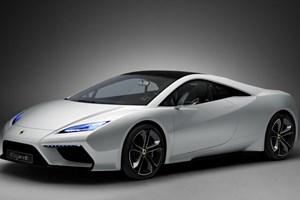
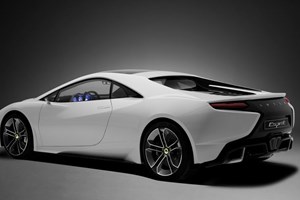
Lotus has confirmed details for its new inhouse V8 engine family, which will make its first road car appearance in the 2013 Esprit.
Responding to feedback which said the 'New Era' plan to launch five new models was weakened by its reliance on Toyota engines, the new management team decided last Christmas to design and develop its own engine. 'The feedback from customers was "how can you justify a £100,000 car with a Toyota engine?",' said chief executive Dany Bahar.
Developing its own family of engines sounds like a far-flung plan - and yet another expense - but Lotus has decades of experience developing motors for other manufacturers in its Lotus Engineering division. The cost has not been disclosed, Bahar saying 'I'm not going to tell you whether it cost £40m, £60m or £70m, but the engineering result will be worth it.'

Lotus V8: the plan

Work on the new modular Lotus engine family has progressed at a furious pace and the first fire-up will take place on 18 August 2011. The first road car to be powered by the V8 will be the 2013 Lotus Esprit, although it could be used in racing cars before then.
The V8 is the first of a modular family of engines which will be designed and built in Norfolk. It's a 90deg, 4800cc V8 developing more than 562bhp at 9000rpm and in excess of 612bhp in turbocharged form for harder R models.

From V8 to V6 and 4cyl: the Lotus engine plan

Stripping a pair of cylinders off would make a 3.6-litre V6; splitting the V8 in half would create a 2.4-litre four-cylinder for smaller cars such as the 2015 Elise.
'Our engine is 80kg lighter than the Lexus V8 we were going to use,' said engineering director Wolf Zimmerman. 'It's also very compact with its dry sump - it's 40% smaller, just 612mm long. At 170kg, it's more like a race engine.'
Zimmerman, who worked at AMG before joining Lotus in autumn 2010, vows the new V8 will be very revvy and have a raucous bark more than a McLaren hum.
The 2013 Esprit will use an automated single-clutch transmission, CAR understands, rather than the rumoured twin-clutch box. Engineers at Hethel have not talked yet about the hybrid power promised, but the transmission can be electrified.

Lotus will race the V8 too

The new V8 is strong enough to be used as a stressed member for race applications and Lotus Motorsport hinted that the engine may be ready in time to compete in its first LMP2 prototype races in 2012.

source : http://www.carmagazine.co.uk
Thursday, June 23, 2011

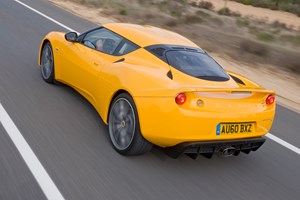
Lotus Evora S

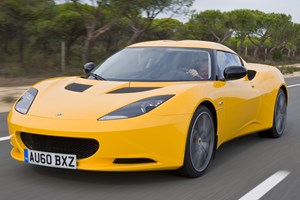
This is the new Lotus Evora S, and with the help of a supercharger, its 3.5-litre V6 has been boosted from the standard Evora’s 276bhp and 252lb ft, to 345bhp and 295lb ft.
Enough, Lotus hopes, to shake off criticism that the Evora just isn’t quick enough; it’s that car’s only real fault, so has the extra power turned the new Evora S into the perfect performance car? Read on for CAR’s first drive of the new 2010 Lotus Evora S.

I thought the Lotus Evora was brilliant, so what’s been improved on the new Lotus Evora S?

That Toyota-sourced, 3.5-litre V6 has been fitted with a supercharger, which changes the character of the car. Power arrives higher up the rev range, while torque swells lower on the tacho. A glance at the torque curve reveals loads more mid-range grunt, the top speed climbs 10 notches to 172mph, but there are downsides too: the kerbweight goes up by 67kg; the fuel consumption figure drops from 33.2 to 28.3mpg; and the CO2 output is bumped up from 199 to 235g/km. Price? Up from £48,550 to £57,550, an increase of £9k.
But the Sports Ratio gearbox, which 90% of Evora customers already plump for, accounts for £1550 of that cost. And the Evora S also comes as standard with the Evora’s £1000 Sport Pack, which adds a Sport button – letting you sharpen the throttle response, raise the rev limit from 6800 to 7200rpm, and dial back the electronic angels – plus that big, black diffuser, cross-drilled and vented brakes, an uprated engine oil cooling system, and a switchable sports exhaust.
Take these extra goodies into account and the power increase only costs £6450, or just under £94 per bhp – not bad when Porsche will charge you nearly £375 per extra pony if you opt for the Carrera S’s Powerkit.

What else is new on the 2011 Lotus Evora range?

The new Evora S isn’t just a supercharger upgrade with a few extra options slapped on. The S – along with every other Lotus sold in Europe from the start of 2011 – now comes with DPM (Dynamic Performance Management), a suite of electronic aids developed with Bosch, including ABS, EBD, traction control, ESP and an electronic differential lock (there’s no proper locking mechanical rear diff), but you’ll be pleased to hear the last three items can all be deactivated.
Lotus has also increased the stiffness of the suspension bushes (in all locations at the back, but in only two places at the front, to be precise), thickened the rear anti-roll bar by a scant 0.5mm, revised the dampers (but not the springs), tweaked the rear suspension geometry, and fitted new front wishbones to increase the castor angle. The result, Lotus claims, is less roll, better stability, the same excellent ride quality, and, as if it wasn’t good enough already, improved steering feel.

Right, so what’s the new Lotus Evora S like to drive?

Bloody brilliant. The steering is as sublime as ever, wonderfully weighted, direct, and brimming with feel. The suspension is still supple, too, soaking up the awful roads that Lotus specifically includes in its test route. And now there’s loads of extra grunt: there’s enough torque that you can leave the S in third or fourth gear on almost any stretch of road and be lazy, or really work the engine hard and feel just how fast this new car really is.
You might not think the figures are headline grabbing, but the Evora S is light, so not only is its performance amplified, but it’s wonderfully quick to change direction too. Plus the supercharger adds some extra aural whooshes of delight and the V6 howls a deeper tune.
Our test car was also fitted with the £2550 Tech Pack – which includes an upgraded stereo, a 7in touch screen sat-nav (still too fiddly and confusing; come on Lotus), USB and MP3 connectivity, cruise control and rear parking sensors – and the £1750 Premium Pack, that adds heated seats and covers the interior in leather, making it feel like a rather lovely place to be.
The small rear seats are still useless, and work best when they double as a second boot, but you only have to make one or two compromises to live with an Evora day-to-day, rather than the multitude of changes you must make if you want to have an Elise.

Verdict

Superb. Extra power and torque answers our major gripe with the regular Evora, the gearshift much improved too, and steering and suspension still sublime.
It's a stark reminder of what Lotus does so right today. Let's hope the ambitious plans for tomorrow don't ruin this delightful sort of simple Lotus.

source : http://www.carmagazine.co.uk
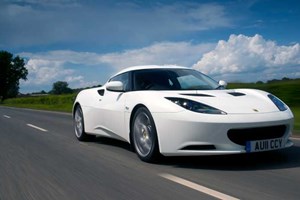
Lotus Evora IPS auto (2011)

The new Lotus Evora IPS has a very simple mission in life. New Lotus management are busy patching up their product range to expand Hethel’s footprint around the world – and much of the world prefers their cars to be automatics.
Buyers in America and Asia, in particular, are likely to pick the two-pedal option, and Lotus predicts the new Evora IPS will account for 60% of all base Evora sales globally. Sound business, then.

Lotus Evora IPS: what does IPS stand for?

Get ready to wince: Intelligent Precision Shift. That’s Lotus speak for the Aisin-supplied U660E six-speed torque converter automatic, borrowed from the Toyota Camry. Lotus has totally rewritten the control systems, however, to give it a more sporting edge.
Although currently only available on the basic 276bhp Evora, insiders admit it could be offered on the supercharged Evora S in future; the slusher can handle up to 400NM, coincidentally exactly the 295lb ft peak torque available in the S.

What’s the penalty for picking the Intelligent Precision Shift?

The Evora IPS spews out 9g/km more of CO2, lifting emissions from 199g/km to 208g/km (should you be tax sensitive). Fuel consumption nibbles a tad higher to 32.1mpg and the kerbweight climbs 50 kilos to 1436kg.
It’s no slouch, though. The sprint to 60mph takes 5.3sec and top speed is capped at 155mph. Expect to pay £1800 more for the IPS.

What’s the Lotus Evora IPS like to drive?

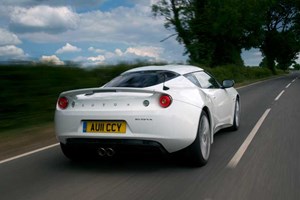
The Evora is one of our favourite sports coupes and it still looks crisp and fresh three years after launch at 2008’s London motor show. It remains a rare sight on our roads – they’ve only sold 2000 in the two years it’s been on sale. Which suggests it’s being badly marketed or the Evora, which starts at £49,600 and climbs to just over £60k, is too expensive.
Clamber across those wide sills (access is only marginally better than an Elise) and the cabin itself is well packaged. The seat and wheel adjust plenty and it’s actually quite roomy in the front with a good smattering of stowage spaces. Ours is equipped with the +2 option which is frankly ludicrous and I just can’t imagine even the smallest children feeling comfortable back there. Although our test car is well built, there is no getting away from the cheap plasticky window and mirror switches and that rubbish (albeit improved) aftermarket touchscreen sat-nav and entertainment system. Lotus is promising some pretty extensive improvements in the Evora’s perceived quality in the next 24 months.
There’s no stick shift, just a pair of very cool, black anodysed metal paddles attached to the wheel and P, R, N and D buttons on the centre console. The Evora IPS is a full automatic, but in Normal mode paddles over-ride gearchanges for 10 seconds before reverting to auto. Select Sport mode and you’ll be in full manual with no interference even at the redline. It will shift down to first at junctions, however.

Does the IPS change the Evora feel?

Not much at first. This is a beautifully sorted chassis, one that flows over the road with a wonderful fluency. There might be a few more kilos onboad but you’d be hard pressed to tell as the Evora darts left and right with what should maybe called Intelligent Precision Steering. The helm of the Evora is like a grown-up Elise’s should be: precise, quick-acting but not quite as nervous or full of microscopic detail. The ride is a brilliant compromise between comfort and control, that damping yet again proving Lotus is the master of suspension tuning.
We’re slushing away through the gears and I’m strangely enjoying it. The world has now passed the milestone of more autos being sold than manuals, and I can see why as I brush around the outskirts of Norwich. We’re just bumbling along and the six-speed auto is doing a smooth job of keeping up with the flow.
The paddles have a well executed snick when they select another gear and there’s very little hunting around for the right ratio (thank goodness Lotus stuck with a six-speeder, rather than the increasingly popular seven and even eight-speeders). The software is programmed to avoid unwanted gearchanges during faster cornering speeds where the car is pulling upwards of 0.6g.

And on the back roads?

Press the Sport button and the Evora IPS pushes through shifts with more urgency, hanging on to gears for longer and generally dons its sportswear by being one or two ratios lower than normal. Most of the time, it works very well but there’s no escaping the fact that the automatic won’t suit keen drivers on a thrill-seeking mission.
The problem comes at high-speed downshifts. Nudge the paddle (let’s say it again, they’re really nice little slivers of aluminium), a cog or two is dropped before a corner, and if you step back on the gas there’s a curious lull before the gear is selected. It makes for staccato progress and is the only real fault I could find on the Evora IPS’s new transmission.
The V6 itself provides swift progress and the base Evora has a well judged performance envelope. Engineers bemoan the slightly too quiet V6 soundtrack, but they’ll be fixing that no doubt once the flat-plane V8, and potential V6 and four-pot spin-offs, arrive.

Verdict

We’ve become so used to the instantaneous gearchanges on the latest twin-clutch transmissions that I suppose we shouldn’t expect a good old-fashioned slusher to match those rifle-bolt up- and downshifts. But the Evora IPS does feel curiously stilted under certain downshifts on back roads and this may disappoint some Lotus owners wanting more luxury while keeping a sporting edge.
It’s not a major fault and the rest of the package is well executed. The Evora IPS is brilliant at cruising and it must be said the standard manual gearbox is one of the few weak spots on the regular Evora, with a vague action and a tendency to mis-slot. If you watch CAR’s video of Bruno Senna driving me up the hill in an Evora S at Goodwood, you’ll notice him pick the wrong gear too!
For the £1800 premium, the IPS is a good choice which only extends the appeal of Evora ownership. Lotus hasn’t built an automatic since 1990’s Excel SA and the new one is a wise move.

Statistics

How much?£51,400
On sale in the UK:Now
Engine:3456cc V6, 276bhp @ 6400rpm, 258lb ft @ 4700rpm
Transmission:Six-speed auto, rear-wheel drive
Performance:155mph, 5.3sec 0-60mph, 32.1mpg, 208g/km
How heavy / made of?1436kg/aluminium and composites
How big (length/width/height in mm)?4342/1848/1223


source : http://www.carmagazine.co.uk
Share

Twitter Delicious Facebook Digg Stumbleupon Favorites